
1) Origins & Definitions
What is a Vampire?
How does one even begin to draw out a meaningful definition of such a word, with such a rich history and myriad meanings?
I prefer to begin with the most generally recognized definition of the word, anchoring it in the consensus of its modern usage.
That being said, I propose something akin to: “A Vampire is a revenant or liminal being sustained by the vitality of the living, most often in modern times described as feeding upon a donor’s energy.”
This latter idea gave rise to the well-known term psychic vampire.
From there, the finer definitions become tenuous, shifting according to the system of belief one adopts. What follows is often less a matter of taxonomy and more a “how many angels can dance on the
head of a pin” kind of argument where subtle distinctions are debated endlessly within differing occult, psychological, or metaphysical frameworks.
With that being said, here is a brief history on the subject:
While the English word vampire stabilized in the eighteenth century, its antecedents appear throughout the world as night-visiting spirits, corpse-walkers, and entities that drain life or energy from the living.
Classically, a vampire is a mythical being from folklore that endures by consuming the vital essence of the living, most often in the form of blood. In popular legends, vampires are portrayed as undead creatures
who prowl by night, using fangs to pierce the flesh and draw sustenance from their victims. They are most strongly rooted in European tradition, particularly in the tales of Eastern Europe, where stories of the
dead rising from their graves to torment the living have persisted for centuries.
In modern times, the vampire is no longer viewed solely as a bloodthirsty predator but as a complex metaphor. The modern vampire may embody themes of addiction, desire, disease, astral travel, artistic longing,
forbidden knowledge, or the struggle of the outsider seeking identity and belonging. To me, modern vampirism represents something profoundly beautiful—an exploration of vitality, awareness, and transformation through understanding.
Beyond the realm of fiction, real-world vampire subcultures have emerged. Participants may embrace the aesthetic through gothic fashion and nocturnal gatherings, or engage in forms of psychic vampirism, claiming
to draw upon emotional or energetic exchanges. These communities often center around ritual, identity, and shared symbolism rather than literal blood consumption, creating a living mythos that bridges imagination and experience.
Is being a Vampire moral? The question of morality for the vampire begins with its mode of survival. To exist, it must draw upon the vitality of others, whether through blood, life force, or psychic energy. This
necessity places the vampire in constant tension between sustenance and harm. Unlike a human predator who hunts animals, the vampire’s sustenance is intrinsically human, making every act of feeding a reflection on power,
dependency, and the ethics of existence itself.
Their existence is marked by liminality. Neither mortal nor fully departed, they cross the boundaries of worlds and identities. They may hunt by night or, in some traditions, even by day, their predation reflecting hunger in both body and spirit. The condition of vampirism is frequently described as a contagion or curse, transmitted through blood, bite, or ritual transgression.
Across cultures, defenses and countermeasures reveal the depth of fear they inspire. Common protections include stakes through the heart, decapitation, fire, sunlight, and the use of sacred symbols or rites. Each of these represents the human attempt to restore order and boundary against the persistent intrusion of the undead.
2) Global Folklore
Europe
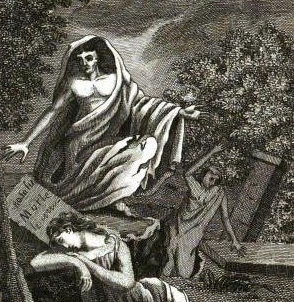
- Slavic revenants: the upyr/upýr and vampir—swollen, ruddy, corpse-like.
- Greek vrykolakas: restless dead tied to improper burial or sacrilege.
- Romanian motifs: strigoi (living or dead), familial curses, animal forms.
Beyond Europe
- Middle East: al-nāʾirah, night-pressers; ghūl with cadaverous appetites.
- South Asia: vetāla, pishacha, and blood-drinking yakshi variants.
- East/Southeast Asia: Chinese jiangshi (hopping corpse); Malay penanggalan.
- Africa & Americas: Ashanti asasabonsam; Caribbean soukoyant/loogaróu; colonial vampire panics.
3) Medieval & Early Modern Europe
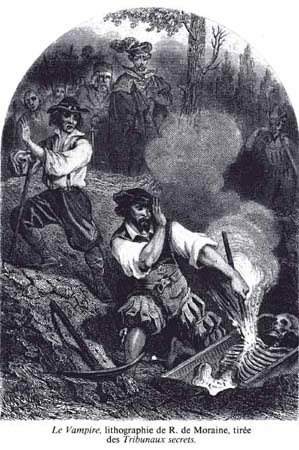
Medieval chronicles record fears of the restless dead: bloated corpses, blood at the lips, and grave disturbances. Early modern “Vampire panics” (17th–18th c.) spread through Central/Eastern Europe, prompting exhumations and legal decrees; medicalization later reframed these as misread decomposition.
4) Gothic Literature
- Romantic archetype: The seductive, aristocratic predator crystallizes in works like Polidori’s The Vampyre and later Stoker’s Dracula.
- Themes: sexuality and repression, invasion anxiety, degeneration and modernity, immortality’s burden.
- Stage & serialization: Melodramatic Draculas and penny dreadfuls spread the iconography (cloak, fangs, castle).
5) Cinema & Media
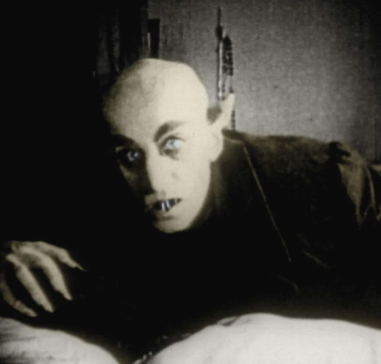
- Silent & early sound: Nosferatu’s plague-shade; Universal’s suave count.
- Global modernisms: hammer horror, Euro-horror, Asian jiangshi cycles, art-house reinventions.
- Late 20th–21st c.: From urban predators to sympathetic antiheroes; TV serial mythologies and games create elaborate vampiric ecologies.
6) Modern Culture & Subcultures
In the modern era, Vampires have shifted from singular monsters of folklore into broad metaphors for human struggle and desire. No longer confined to the shadows of graveyards,
they now inhabit the symbolic space of addiction, disease, outsider identity, and the moral ambiguities of predation. Each interpretation refracts a particular cultural anxiety:
vampirism as the needle of addiction, the contagion of epidemic, the mark of queerness and social difference, or the temptation of consuming others for survival.
Vampirism also becomes a canvas for exploring ethics of power and consent. Literature and film reframe the predator–prey dynamic into questions of agency, intimacy, and negotiated exchange.
The act of blood-drinking becomes erotic, contractual, or even communal, transforming an image of violation into one of complex relationships. Parallel to this is the theme of governance:
entire fictional worlds imagine courts of immortals, laws of secrecy, and hierarchies of undead society, reflecting human struggles with authority, secrecy, and rebellion.
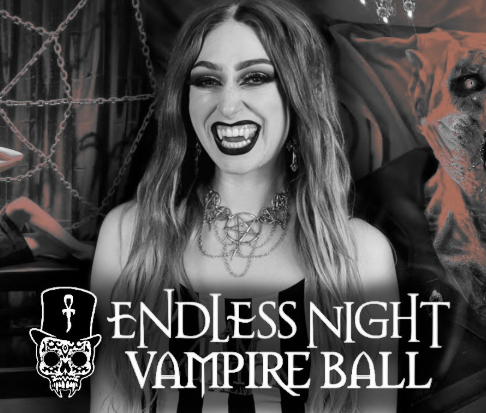
Subcultures draw the Vampire into lived expression. The Gothic aesthetic emerges in fashion, music, and nightlife, fusing pale skin, black attire, and ritualized performance with a sense of
identity rooted in otherness. Clubs and gatherings become sanctuaries where the vampire serves as a guiding archetype, celebrating mystery, beauty, and nocturnal belonging. Some take it further,
enacting vampire lifestyles that blend role-play, spirituality, and alternative philosophy, while others build communities around shared fascination with immortality, energy-draining rituals, and symbolic blood exchange.
In contemporary fiction, Vampires thrive in hybrid worlds of science and magic. Genetic engineering, virology, and biotechnology converge with sorcery, curses, and occult pacts to create a new
lore where the vampire exists as both supernatural entity and product of science. This duality allows the myth to persist across genres, appearing in horror, romance, fantasy, and speculative fiction alike.
The modern vampire thus transcends its folkloric roots. It is a cultural cipher — monster, metaphor, and mirror — endlessly adaptable, embodying fears and desires that society projects into the dark.
7) Timeline
8) Glossary
- Revenant
- A being returned from death, either bodily or spectral. Revenants are among the earliest vampire archetypes, blamed for disease, misfortune, or nightly visitations upon the living.
- Contagion
- The spread of vampirism through bite, blood-exchange, curse, or ritual error. Mirrors ancient fears of plague and modern anxieties about infection and corruption.
- Jiangshi
- Chinese “hopping” corpse animated by qi imbalance. Stiff-limbed, pale, and relentless, it drains life force rather than blood and embodies fears of improper burial and cosmic disorder.
- Strigoi
- Romanian restless spirits, either living witches or dead returned from the grave. Said to cause illness, drain vitality, and spread misfortune, they are central to the Balkan vampire complex.
- Stake & Fire
- The most enduring apotropaic measures. The stake immobilizes the corpse, fire annihilates it, and both may be accompanied by decapitation, scattering seeds, or use of holy objects.
- Nosferatu
- A term popularized in modern times, associated with the hideous, rat-like vampire of film. Represents pestilence, vermin, and the monstrous side of the undead.
- Dhampir
- The offspring of a vampire and a mortal. Folklore credits them with special powers to detect and destroy the undead, existing as liminal figures between worlds.
- Lamia
- From Greco-Roman lore, a vampiric female demon that preys upon children and seduces men. Later absorbed into the Gothic imagination as a symbol of dangerous female sexuality.
- Upir
- A Slavic vampire figure, often tied to nocturnal attacks and blood-drinking. The word itself is thought to be one of the linguistic ancestors of “vampire.”
- Vetala
- From Hindu mythology, a spirit that possesses corpses and animates them to wander. Vetalas whisper secrets of the dead and disturb the living, akin to vampiric revenants.
- Chupacabra
- Modern Latin American legend of the “goat-sucker,” a creature said to drain animals of blood. Represents the persistence of vampiric fear into contemporary folklore.
- Asanbosam
- From West African lore, a vampiric being dwelling in trees with iron teeth and hooklike feet. Ambushes hunters and travelers, reflecting anxieties about wilderness dangers.
- Lugat
- An Albanian vampire, often described as shadowy and shape-shifting. Said to lurk in darkness, feeding on both human and animal blood.
- Moroi
- Close kin of the strigoi in Romanian belief, sometimes described as the offspring of strigoi or as a vampiric entity in its own right. Associated with draining life and sowing misfortune.
- Succubus / Incubus
- Sexual demons that visit sleepers by night. While not always blood-drinkers, their parasitic feeding on life energy overlaps with vampiric tradition.
- Blood Pact
- A ritualized exchange of blood that binds individuals in loyalty, love, or servitude. In vampire myth this often marks the point of transformation or eternal bond.
- Crypt
- The underground chamber where the vampire lies dormant. Burial site, womb of the undead, and threshold between worlds.
9) Reflections
The vampire’s evolution is not a straight line but a shifting reflection of human fears and desires. At its beginning, the vampire appears as a graveside terror,
a revenant rising from the earth to explain disease, plague, and the wasting of the body. It is death given form, feeding on the living, a specter of contagion
in a time when medicine offered no answers.
As history unfolds, the vampire becomes more than a corpse returned to life. It grows into a cultural mirror, absorbing and reflecting whatever anxieties dominate
an age. In times of political turmoil it embodies invasion and the threat of the outsider. In eras of repression it personifies forbidden sexuality, dangerous allure,
and the collapse of self-control. In the modern imagination it transforms again, reflecting obsessions with addiction, eternal youth, and the fine line between predator and lover.
The figure shifts from monstrous threat to charismatic antihero, from grotesque corpse to aristocratic seducer, from alien invader to tortured soul. Yet one constant
remains: the primal drama of life feeding upon life. This theme, at once horrific and seductive, is what sustains the vampire in legend and literature. Always
adaptable, never dying, the vampire persists as a living symbol of humanity’s darkest reflections.
Modern reimaginings complicate the picture of morality. If a human willingly offers blood or energy, does the act become moral? Some vampire subcultures and fictions
explore consensual feeding, shifting vampirism from violation to exchange. Yet even consent is ethically tangled: is it truly free if shaped by seduction, glamour, or power imbalance?